

The holidays are supposed to be a time of celebration, not a source of financial stress. Yet every year, many people find themselves wondering where all their money went long before the decorations come down.
A few smart planning decisions can help you enjoy the season, stay in control of your spending, and focus on what matters most. Here's how to create a holiday budget that helps you spend with confidence from your first holiday purchase to the start of the new year.
Decide What Matters Most This Holiday Season
Before you create a holiday budget, take a step back and think about the season you want to have.
It's easy to get caught up in advertisements, flash sales and gift-giving expectations. But a meaningful holiday season looks different for everyone.
For some people, traveling to see family is the top priority. For others, it's hosting holiday meals, finding the perfect gifts or supporting causes they care about.
Take a few minutes to consider what's most important to you this year. These priorities will help guide your spending decisions and make it easier to determine where your money should go.
When your holiday budget reflects your values, it's often easier to stay on track because you're spending intentionally instead of reacting to every opportunity that comes along.
Determine Your Holiday Spending Limit
Once you've identified your priorities, it's time to decide how much you can comfortably spend.
Start by reviewing your income, savings and regular monthly expenses. Then think about any upcoming financial obligations you'll need to cover after the holidays.
The goal isn't to spend as little as possible. It's to create a holiday spending plan that fits comfortably within your overall financial picture and where you get the most out of every dollar spent.
One helpful question to ask yourself is:
If I spend this amount during the holidays, will I still feel confident about my finances in January?
If the answer is yes, you've likely found a reasonable starting point.
If the answer is no, consider adjusting your spending limit before making purchases. Setting realistic expectations now can help you make decisions with confidence throughout the season.
Build Your Holiday Budget Categories
Now that you know your overall spending limit, divide it into categories. This helps turn a single number into a practical holiday budget that you can follow.
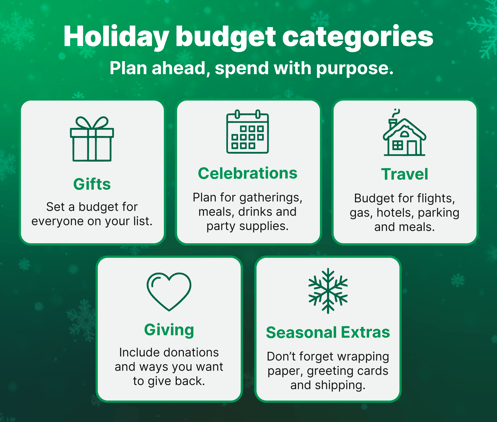
Gifts
For many households, gifts represent the largest holiday expense.
Consider creating separate spending limits for immediate family, extended family, friends, coworkers and anyone else on your list.
Giving each group its own budget can help you avoid spending more in one area than you intended.
Celebrations and Meals
Holiday gatherings often come with costs that are easy to overlook.
Whether you're hosting a large family dinner or attending several seasonal events, consider budgeting for food, beverages, entertainment and supplies.
Travel
If holiday travel is part of your plan, include expenses such as transportation, lodging, fuel, parking and meals. Planning for these costs ahead of time can help prevent surprises later.
Check it out: holiday travel without the budget hangover >
Giving
Many people enjoy supporting charitable organizations during the holiday season. Including donations in your budget allows you to be generous while remaining intentional about your spending.
Seasonal Extras
Don't forget smaller expenses such as decorations, wrapping paper, holiday cards, postage and shipping costs.
These purchases may seem minor individually, but they can add up quickly throughout the season.
Create a Holiday Shopping Plan
A holiday budget tells you how much you can spend. A shopping plan helps you stick to it.
Before sales and promotions start competing for your attention, make a list of everyone you plan to shop for and assign a spending limit to each person.
You don't need every gift idea figured out immediately. The goal is simply to create a framework before you start shopping.
You may also find it helpful to spread purchases across several weeks rather than waiting until the last minute. This can make expenses feel more manageable and give you more time to compare options.
Most importantly, try to make purchasing decisions before you see the sale, not because you saw the sale. That's often the difference between intentional spending and impulse spending.
Use Digital Tools to Stay on Track
Creating a holiday budget is only half the battle. The other half is monitoring it.
Regular check-ins can help you understand where your money is going and whether you're staying within the limits you've established.
A few simple habits can help:
- Review your spending weekly.
- Check account balances regularly.
- Monitor transactions as purchases occur.
- Set alerts for large purchases or low balances.
- Compare actual spending against your budget throughout the season.
Many checking accounts and digital banking tools make it easier to track spending in real time, helping you stay informed without maintaining a complicated spreadsheet.
The more visibility you have into your spending, the easier it becomes to adjust when needed.
Making Credit Cards Part of Your Holiday Spending Plan
Credit cards can be a useful tool during the holidays when they're used as part of a larger plan.
Many shoppers appreciate the convenience, security features, fraud protection and rewards programs that credit cards can provide. The key is making sure your spending decisions are driven by your budget, not by your available credit.
Before making purchases, consider how those expenses fit into your overall holiday spending plan and your financial goals for the months ahead.
A few smart practices include:
- Tracking purchases throughout the season.
- Staying within your planned spending limits.
- Reviewing statements regularly.
- Understanding how purchases fit into your repayment plan.
- Using rewards as a bonus rather than a reason to spend more.
Rewards, cash back and purchase protections can provide additional value. But the most effective holiday spending strategy starts with a budget and uses available tools to support it.
Learn how to maximize your credit card rewards during the holidays >
What to Do If You're Already Feeling Financial Pressure
Not everyone starts the holiday season from the same financial position.
If you're already feeling stretched, it may help to focus your spending on the traditions, experiences and relationships that matter most.
That could mean simplifying gift exchanges, setting lower spending limits or finding meaningful alternatives to expensive purchases.
Many of the moments people remember most from the holidays have little to do with how much money was spent. Time with family, favorite traditions and shared experiences often leave the biggest impression long after the season has ended.
Adjusting expectations doesn't mean lowering the quality of the holiday season. It simply means creating a plan that works for your situation.
Think Beyond December
A good holiday budget doesn't end when the gifts are wrapped.
As you plan your spending, think about how your holiday decisions fit into your broader financial goals for the coming year.
Ask yourself:
- What financial goals do I want to focus on next year?
- How will holiday spending affect those goals?
- Are there upcoming expenses I need to prepare for?
- What habits would I like to carry into the new year?
Approaching holiday spending as part of a larger financial plan can help you make decisions that feel right both now and later.
Consider Saving for the Holidays All Year Long
One of the easiest ways to reduce holiday stress is to start preparing before the season arrives.
Special-purpose savings accounts, such as a Holiday Club Savings account, can help you set aside money throughout the year for holiday expenses. Instead of trying to find room in your budget during November and December, you're gradually building a dedicated fund over time.
Even small contributions can add up. Saving $10 a week throughout the year would give you more than $500 to use for gifts, travel, gatherings or other seasonal expenses by the time the holidays arrive.
A dedicated holiday savings account can also make it easier to separate holiday spending from your everyday savings goals. When the season begins, you'll know exactly how much you've set aside and can build your holiday budget around that amount.
While it's never too late to create a holiday spending plan, planning ahead for next year can make future holidays feel less stressful and more manageable.
Holiday Budget Checklist
Before the season gets busy, use this checklist to keep your holiday budget on track:
- Identify your holiday priorities.
- Determine your overall spending limit.
- Divide your budget into categories.
- Create a gift list.
- Establish spending limits for each recipient.
- Track purchases regularly.
- Use account alerts and digital tools.
- Watch for impulse spending.
- Review your budget throughout the season.
- Consider how holiday spending affects your goals for next year.
Enjoy the Season, Not the Stress
The purpose of a holiday budget isn't to remove the fun from the holidays. It's to help you spend intentionally on the things that matter most.
With a little planning, regular check-ins and realistic expectations, you can approach holiday spending with confidence while keeping your broader financial goals in focus.
After all, the best holiday budget isn't necessarily the one that helps you spend less. It's the one that helps you make the most of the season while feeling good about your financial decisions long after the holidays are over.
Check out the next article: How to Avoid Impulse Spending During Black Friday and Cyber Monday
