

When people think about financial institutions, they usually focus on products like checking accounts, loans and credit cards. Those things matter, but they're only part of the story.
Behind every account, loan approval and financial conversation is a business model that shapes how decisions are made.
Credit unions were founded on a simple philosophy: People Helping People. It's more than a slogan. It's the idea that financial services should strengthen members, families and communities, not just generate profits.
Understanding that philosophy can help explain why millions of Americans choose credit union membership and why credit unions continue to play an important role in local communities.
What Is a Credit Union?
At first glance, credit unions and banks appear very similar. Both offer checking accounts, savings accounts, loans, credit cards and digital banking services.
Most people could use either one for their day-to-day financial needs. The biggest difference is how they're structured.
A credit union is a not-for-profit financial cooperative owned by its members. Rather than serving shareholders, credit unions exist to serve the people who use their products and services. Every member becomes a part owner through their membership.
That ownership model creates a different set of priorities. Instead of maximizing profits for investors, credit unions focus on helping members improve their financial well-being through better rates, lower fees, financial guidance and community investment.
Why Credit Unions Were Created
Credit unions were established to provide affordable financial services and create opportunities for people who may have been underserved by traditional financial institutions.
While the financial world has changed significantly over the years, that mission remains largely the same. Credit unions continue to focus on helping members achieve successful financial futures while supporting the communities they serve.
A Credit Union Story Close to Home
Veridian's roots reflect this philosophy. The credit union was founded in the 1930s to serve John Deere employees and their families. As communities grew and financial needs changed, membership expanded well beyond those original beginnings.
Today, membership eligibility extends far beyond that early employee group, but the cooperative structure remains the same. While the products and services have evolved over time, the mission of helping people achieve financial success has not.
How Credit Union Membership Changes the Relationship
Many people think membership simply means opening an account. At a credit union, membership means something more.
You're More Than an Account Number
Because credit unions are member-owned, the relationship works differently.
Members aren't just customers. They're owners. Credit unions are governed by boards of directors elected by members, giving them a voice in the institution's future.
This democratic structure helps ensure decisions are made with members' best interests in mind. Rather than focusing on quarterly returns for shareholders, credit unions focus on creating long-term value for their members.
Success Is Shared
When a traditional for-profit company performs well, profits are generally returned to investors.
When a credit union performs well, those benefits can be returned to members through competitive loan rates, stronger savings returns, lower fees, improved services and investments that enhance the member experience.
This member-first structure creates a cycle where the success of the organization and the success of its members are closely connected.
Membership Is Often Easier Than People Think
One common misconception is that joining a credit union is difficult or restricted to a specific employer or group.
While every credit union has membership requirements, many community credit unions offer broad eligibility. What may have started as an employee-based organization decades ago has often expanded to serve entire regions and communities.
Veridian, for example, has membership pathways available to people throughout Iowa, Nebraska and Minnesota, as well as options for people outside those areas.
For many people, membership is much more accessible than they realize.
Learn about the value of Veridian membership >
Credit Union Benefits Go Beyond Rates and Fees
While lower fees and competitive rates often grab attention, the benefits of credit union membership extend beyond financial products.
More Value for Everyday Banking
Credit unions generally offer the same core services consumers expect, including checking accounts, savings accounts, mortgages, auto loans, credit cards, retirement accounts and digital banking tools.
The difference isn't necessarily what they offer. It's why they're offering it.
Since credit unions are focused on member success rather than shareholder returns, their products and services are designed to support members' financial goals first.
Service Built Around People
Financial decisions aren't always straightforward. Buying a home, managing debt, saving for college and preparing for retirement often require guidance, not just transactions.
The cooperative model encourages a relationship-based approach. Rather than focusing solely on selling products, credit unions often prioritize helping members understand their options and make informed financial decisions.
That can make a meaningful difference during important life milestones.
Support Through Every Stage of Life
Financial needs change over time.
A recent graduate may be opening their first checking account. A growing family may be saving for a home. Someone approaching retirement may be focused on protecting long-term savings.
The credit union philosophy recognizes that financial success isn't one-size-fits-all. It requires ongoing support, trusted advice and tools that help members navigate changing circumstances.
How the People Helping People Philosophy Strengthens Communities
The credit union difference doesn't stop with individual members.
Credit unions are rooted in the communities they serve and their impact often extends beyond account holders and borrowers.
Community Investment Starts With Members
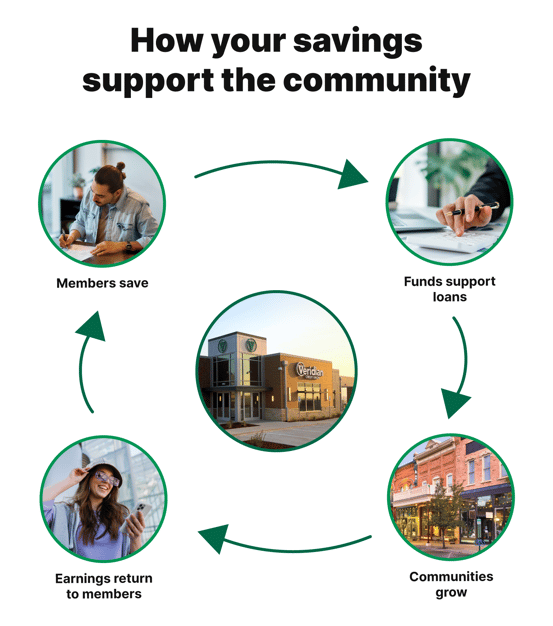
When members deposit money at a credit union, those funds help support lending within the communities where members live and work.
Those loans may help a family purchase a home, a small business expand operations or a member finance a reliable vehicle. In turn, those investments help strengthen local economies and create opportunities for others.
It's a powerful example of how a cooperative model can create benefits that ripple beyond a single transaction.
Financial Education Creates Stronger Financial Futures
Access to financial services matters, but knowledge matters too.
Many credit unions invest in financial education through workshops, school partnerships, educational resources and community programs. The goal is to help people build the skills and confidence needed to make sound financial decisions.
Strong financial education can lead to stronger households, and stronger households contribute to healthier communities.
Giving Back Is Part of the Mission
Community involvement isn't a side project for many credit unions. It's part of their purpose.
Veridian's commitment to community partnerships and financial literacy initiatives reflects the broader credit union belief that success should be shared. Supporting nonprofit organizations, volunteering and investing in community programs are all ways credit unions work to strengthen the places they call home.
The goal isn't simply to provide financial services. It's to create positive, lasting impact.
The Credit Union Difference in Action
Understanding the credit union model is one thing. Seeing it in practice is another.
From Employee Cooperative to Community Partner
Veridian's evolution from serving a single employee group to supporting hundreds of thousands of members demonstrates how credit unions grow while staying true to their mission. What began as a way to help workers access affordable financial services has become a broad community-focused organization built around member success.
Decisions Driven by Members
A member-owned structure influences everything from governance to product development.
Because members elect representatives to help guide the credit union's future, accountability remains connected to the people who use the institution every day.
Building Stronger Communities Together
The credit union model recognizes that financial well-being doesn't exist in isolation.
When individuals succeed financially, families become stronger. When families become stronger, communities benefit. Credit unions play a role in that cycle by helping members access financial tools, education and opportunities designed to support long-term success.
Why the Credit Union Difference Matters Today
Consumers have more financial choices than ever before.
Rates, technology and convenience will always matter. But many people are also looking for organizations that align with their values and help them achieve more than short-term financial goals.
The credit union model offers a different approach. It's built on member ownership, cooperative principles and a commitment to helping people succeed together. Those values influence how decisions are made, how members are served and how communities are supported.
When you understand how a credit union is structured, you begin to see that the difference isn't just about banking. It's about belonging to an organization designed to put people first.
Frequently Asked Questions
What is a credit union?
A credit union is a not-for-profit financial cooperative owned by its members. Members are part owners, and the organization operates to serve their financial interests rather than generate profits for outside shareholders.
How is a credit union different from a bank?
The primary difference is ownership. Banks are generally owned by shareholders, while credit unions are owned by their members. This structure influences how decisions are made and how earnings are used.
What are the benefits of credit union membership?
Common credit union benefits include competitive rates, lower fees, member-focused service, financial education resources and opportunities to participate in a cooperative organization.
Can anyone join a credit union?
Most credit unions have membership eligibility requirements, but many offer broad pathways to membership and serve entire communities or regions.
Are credit unions safe?
Credit unions are regulated financial institutions that provide many of the same services consumers expect from banks while operating under a member-owned cooperative structure.
Conclusion: Experience the Credit Union Difference
When people compare financial institutions, they often start with products, rates and features. Those things are important, but they're only part of the story.
The real credit union difference comes from ownership, purpose and community impact. Credit unions operate on the belief that financial success is stronger when it's shared.
That's the idea behind People Helping People, and it's why credit unions continue to make a difference for members, families and communities.
Learn more about how you can be a part of the credit union difference >